Plenary Speakers
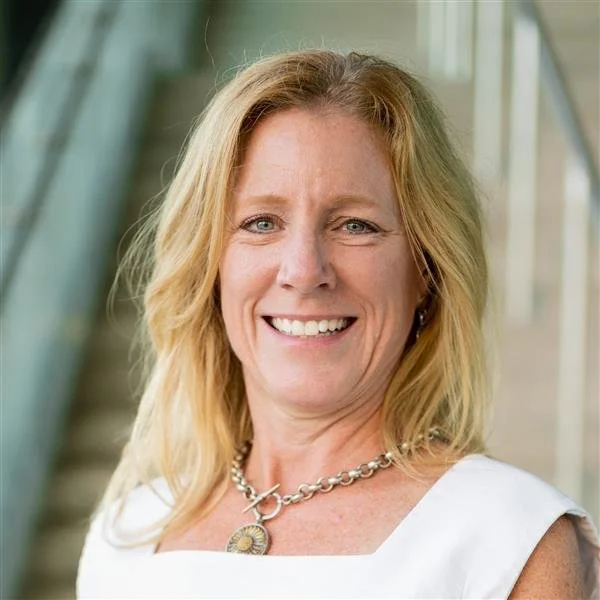

Dr. Carmen Sandi
Swiss Federal Technology Institute of Lausanne (EPFL)
The mitochondrial logic of stress vulnerability and resilience
Dr. Tracy Bale
University of Colorado
Extracellular vesicles are key stress communicators
Public lecture

Dr. Cecile Rousseau
Canada Research Chair in Preventing Violent Radicalization, McGill University
Rethinking youth distress and violence in tense times
4pm Registration opens at Union Française de Montréal
5.00-6.00pm Public Lecture - Dr. Cecile Rousseau
session chaired by Dr. Robert Paul Juster, U Montréal
Rethinking youth distress and violence in tense times
6.30pm - late Opening Reception
7.30-8.30am Registration, Welcome coffee & pastries
8.30-10.00am Opening Remarks & Plenary 1 -
Dr. Carmen Sandi - The mitochondrial logic of stress vulnerability and resilience
10.30-12.30pm Symposium 1 - Stress & brain-body interactions
Chair Jim Herman
Eric Wohleb University of Cincinnati, USA
Microglial regulation of synaptic plasticity and behavior in stress
Maria Rodriguez Aburto University College Cork, Ireland
Mode of Birth and Brain Barrier Development in Early Life
Scott Russo Icahn School of Medicine at Mount Sinai, USA
Brain-Body Neuroimmune Mechanisms of Stress and Depression
Weronika Tomaszewska Research Network Łukasiewicz – PORT Polish Center for Technology Development, Poland
Decoding resilience: how lipid signals and microglia shape outcomes after Adverse Childhood Experiences
12.30-2.00pm Lunch in Agora
2.00-4.00pm Symposium 2 - Understanding the Impacts of Continued Discrimination
Chair Heather Brenhouse
Brian Dias Children’s Hospital Los Angeles, USA
Cross-species investigations of legacies of experience
Wendie Marks University of Saskatchewan, Canada
Engaging Indigenous Peoples in preclinical research
Ali Jawaid Łukasiewicz Research Network, Poland
Towards the biological plausibility and biomarkers of intergenerational trauma in genocide-surviving human populations
Alberto Corona Icahn School of Medicine at Mount Sinai, USA
Form Follows Function: Spatially Organized Neuron-Glia Interactions Dictate Habenula Function
4.20-4.50pm Data Blitz
4.50-5.30pm Panel - ‘Our Models in Crisis?’
Discussion lead: Tallie Z. Baram
Panelists: Johannes Bohacek, Serena Dudek, Maya Opendak
5.30-7.00pm Poster Session 1
7.30pm - late Trainee Social Event @ Pub l’Île Noire (Google Maps)
8.00-8.30am Welcome coffee & pastries
8.30-10.30am Symposium 3 - Early-Life Adversity
Chair Seema Bhatnagar
Mathias Schmidt Max Planck Institute of Psychiatry, Germany
Multilevel sex-specific neurobiological signatures of early life adversity
Patricia Pelufo-Silveira McGill University, Canada
Insulin-Sensitive Brain–Body Pathways in Early-Life Stress
Jessica Bolton Georgia State University, USA
Early-life adversity alters microglial synaptic pruning of developing stress circuits in a sex-specific manner
Ossama Ghenissa CRCHUM & University of Montreal, Canada
Investigating the role of amygdala astrocytes in early-life stress
10.50-12.50pm Symposium 4 - Translating Insight from Basic Research towards Improved Human Health
Chair Caroline Ménard
Kim Hellemans Carleton University, Canada
A profile-based approach to linking Early-Life Trauma, Current Stress, and Cannabis Use in Emerging Adults
Christian Gaden-Jensen Foundation for Mental Health and Aarhus University, Denmark
Evidence-based Public Stress Reduction Programs in Denmark. The Open and Calm Stepped Care Model
Didier Jutras-Aswad CRCHUM & Université de Montréal, Canada
Stress and Addiction: Integrating Mechanisms to Inform Innovation in Substance Use Disorder Interventions
Matthew Kearney McLean Hospital, Harvard Medical School, USA
Mechanisms of Social Fear and Extinction in Mice
12.50-2.30pm Lunch & Poster Session 2 in Agora
2.30-4.30pm Symposium 5 - Stress & Cognition
Chair Lawrence Reagan
Sylvie Lesuis University of Amsterdam, Netherlands
Stress and threat memory generalization: molecules and microcircuits
Kate Wassum University of California Los Angeles, USA
Neuronal circuits through which stress disrupts agency and promotes habit.
Frank Meye Utrecht University, Netherlands
Stress-driven plasticity in limbic circuits drives increased intake of food reward
Xin Zhao University of Western Ontario, Canada
Stress vulnerability of retrospective working memory mediated by prefrontal cortex corticotropin releasing hormone in mice
4.45-5.00pm Data Blitz
5.00-5.30pm Panel 'The nature of resilience'
Discussion lead: Michael Meaney
Panelists: Marie-Claude Audet, Kevin Bath, Jim Herman
5.30-7.00pm Poster Session 3
8.00-9.30am Breakfast & networking event
9.30am Poster awards
9.30-10.45am Plenary 2 -
Dr. Tracy Bale - Extracellular vesicles are key stress communicators
11.00-1.00pm Symposium 6 - Stress & Psychedelics
Chair Matt Hill
Michael Wheeler Harvard University, USA
Decoding and targeting neuroimmune cross-talk controlling stress behaviors
Jaideep Bains University Health Network, Toronto, Canada
Sex and context specific effects of psilocybin on the stress axis
Leah Mayo University of Calgary, Canada
The stress of the trip: Exploring interactions between the stress response and psychedelic experience in humans
Axel Rosado Yale University, USA
α₂-Adrenergic receptor modulates 5-HT2A-mediated behavioral effects of MDMA and psilocybin in mice
1.00-1.30pm Closing remarks
1.30pm Lunch in Agora
2.30pm Special Events
1) Mural tour (walking tour with Dominique)
2) Microbrewery in Old Montreal - l’Annexe Brewsky (Google Maps)